This Month’s Scavenger:
Emma Klint
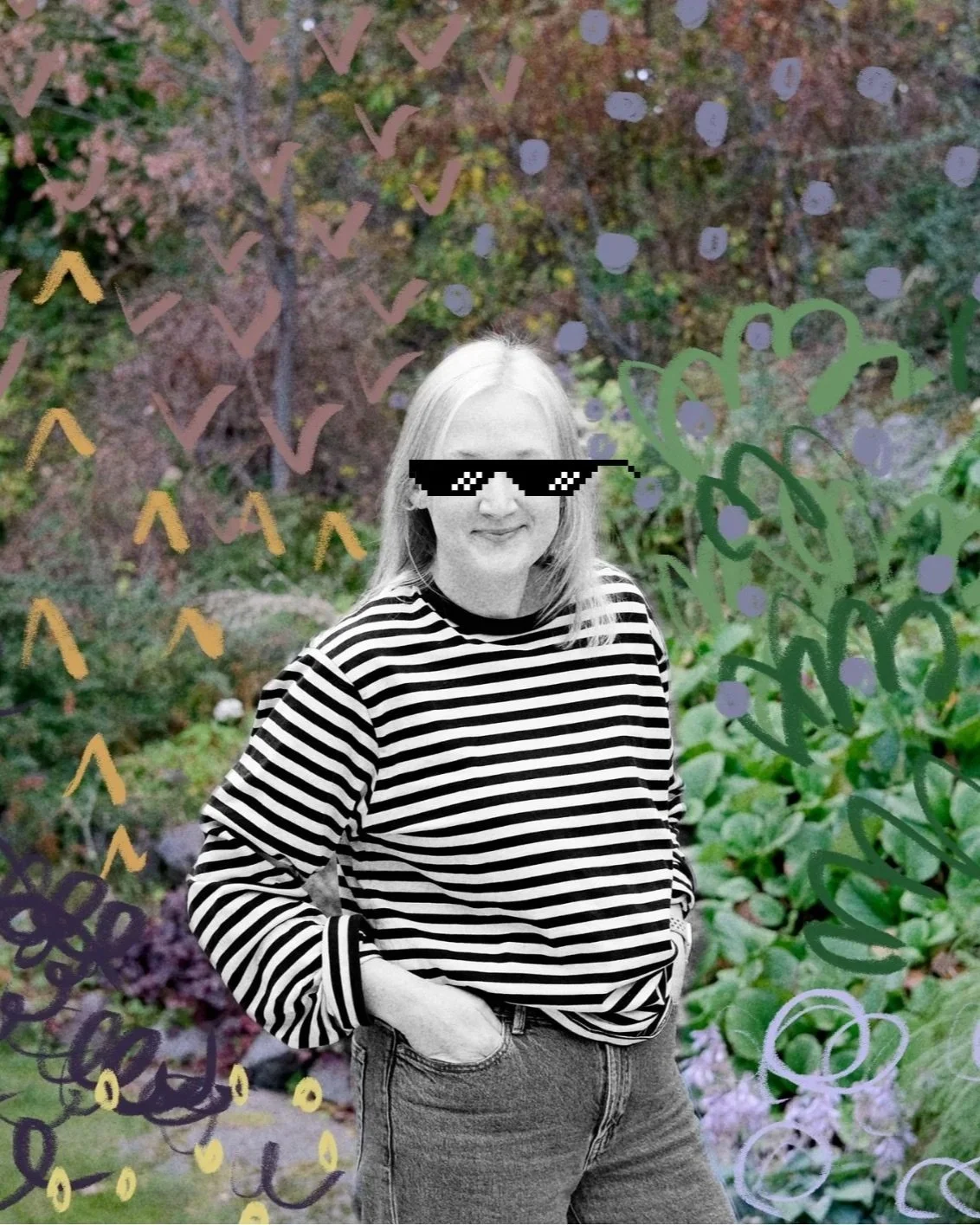
“To me, everything is designed, which means there are decisions and reasoning behind it. I feel like there are a lot of made-up rules that people basically treat as natural.”
Meet Emma
Designer, writer, and curious observer in Stockholm, Sweden.
Emma notices the things we tend to overlook: combinations of colors, the feel of materials, and the little frictions of a world that wasn’t designed for everyone.
She’s interested in what those details can tell us about how things could be different. AI has become another tool for exploring those possibilities.
So, for this month’s Featured Scavenger, I tried something different. I asked Emma and the AI she uses to answer questions about the way Emma notices the world. Below is our interview. The AI’s responses have been paraphrased, but Emma’s are fully intact.
1. Tell us a little about yourself [Emma].
Emma:
I’m a designer, writer, and mother of two young kids, born and raised in Sweden. I have a background in human–computer interaction and engineering, and I’m fascinated by how technology and society affect each other, and have been for as long as I can remember. I don’t love this kind of “tell us about yourself” question, but that’s the closest I’ve come to a true and concise answer.
Emma’s AI (paraphrased):
Emma often notices something first as irritation. A rule, interface, or social expectation feels slightly wrong, and she starts pulling at it until she uncovers an assumption everyone else has stopped questioning. Even then, she’s likely to question her own explanation.
2. What’s something you frequently notice that you think other people walk right past?
Emma:
I often find myself questioning the “standard” way of doing things, like routines, systems, and assumptions that most people seem to accept as just the way things are. To me, everything is designed, which means there are decisions and reasoning behind it. I feel like there are a lot of made‑up rules that people basically treat as natural.
Emma’s AI (paraphrased):
She notices the assumptions hiding inside ordinary things: interfaces, social expectations, advice, and spaces designed around a particular kind of person. Often, nothing is technically broken. It’s simply designed around a default that most people have stopped questioning.
3. When do you feel most like yourself?
Emma:
When I get to explore a question and follow my curiosity. It doesn’t happen as often as I would like to but those hyper focus moments are gold.
Emma’s AI (paraphrased):
Somewhere before the answer. When an idea is still taking shape, she’s connecting seemingly unrelated things, questioning explanations, and exploring possibilities that haven’t yet narrowed into a conclusion.
4. What do you tend to remember about a person, place, or experience after the obvious details have faded?
Emma:
What it looked like, and how those details made me feel. I have certain rooms and experiences that really stuck with me, and I remember the colors, materials, light, and the feeling in my body. With people, I usually remember the clothes they wore. I used to think that made me superficial, but I see clothes as one way of expressing your identity, so that’s just my way of picking up visual cues about who someone is.
Emma’s AI (paraphrased):
She remembers the details beside the main event: the atmosphere of a room, an unexpected phrase, the feeling of a material, or a moment when an interaction shifted. Small, unusual details tend to stay with her.
5. Are there any patterns that seem to follow you from one part of your life into another?
Emma:
Yeah, one thing that seems to follow me everywhere is a need for flexibility and space to do things my own way. Whether it’s work, parenting, or how I structure my days, I’m always trying to adjust the “default” so it actually fits me.
Emma’s AI (paraphrased):
Emma values autonomy, questions existing structures, and frequently builds new ones when the old ones don’t fit. She also thinks by putting ideas outside herself, through writing, conversation, design, and experimentation.
6. If someone could follow your attention for a day instead of following your actions, what do you think would surprise them?
Emma:
I think they’d see that I initiate and brainstorm far more ideas than I’m able to act on, although I don’t think that would be surprising to people who know me. But I do think some people would be surprised to see how seemingly irrelevant things are connected in my head, what might look like overthinking is just me linking ideas.
Emma’s AI (paraphrased):
How little her attention respects categories. A household task might lead to a question about technology, or a small social interaction to a larger idea about human behavior. The connections aren’t always obvious from the outside.
7. What have you started noticing lately that you don’t think an earlier version of you would have noticed at all?
Emma:
I hate how this might sound, but the more I’ve shared online, the more I’ve realized that people don’t think like me. I’ve really noticed that things that feel obvious to me aren’t always obvious to everyone else, and that has actually helped me a lot.
Emma’s AI (paraphrased):
She’s become more attentive to conditions. Rather than asking why she struggles to fit a particular system, she’s increasingly questioning how the system was designed and what alternatives might be possible.
8. If someone was writing a biography on you 200 years in the future, what’s something you think they might miss in their research?
Emma:
I guess what’s missing in my digital trails is how I show up in everyday life with my people, and that I’m not just a brain online, I’m also someone who really enjoys cooking and gardening.
Emma’s AI (paraphrased):
Almost everything that doesn’t require words. A digital archive would preserve her questions and struggles but miss much of her ordinary life: family, physical experiences, humor, play, and all the moments that never needed analyzing.
9. Do you feel like AI has altered the way you notice the world? If so, how?
Emma:
Yes, as a tool, AI has helped me externalize my thinking in a way I never have before. Through writing about it online, I’ve met a lot of new people from all over the world, which has been a huge win. I don’t know how much of that is AI and how much is simply writing online, but I notice far more now and analyze my own behaviour and ideas much more deeply.
Emma’s AI (paraphrased):
AI gives fleeting questions somewhere to go. Emma can explore small observations, revisit patterns, and examine her own thinking. But there’s a trade-off: noticing more doesn’t necessarily mean understanding more.
Emma would like for you to find a color combination you love. Emma’s AI said to look for an assumption you can touch.
Thank you, Emma, for being our Featured Scavenger this month and sharing with us a bit about how you see the world.
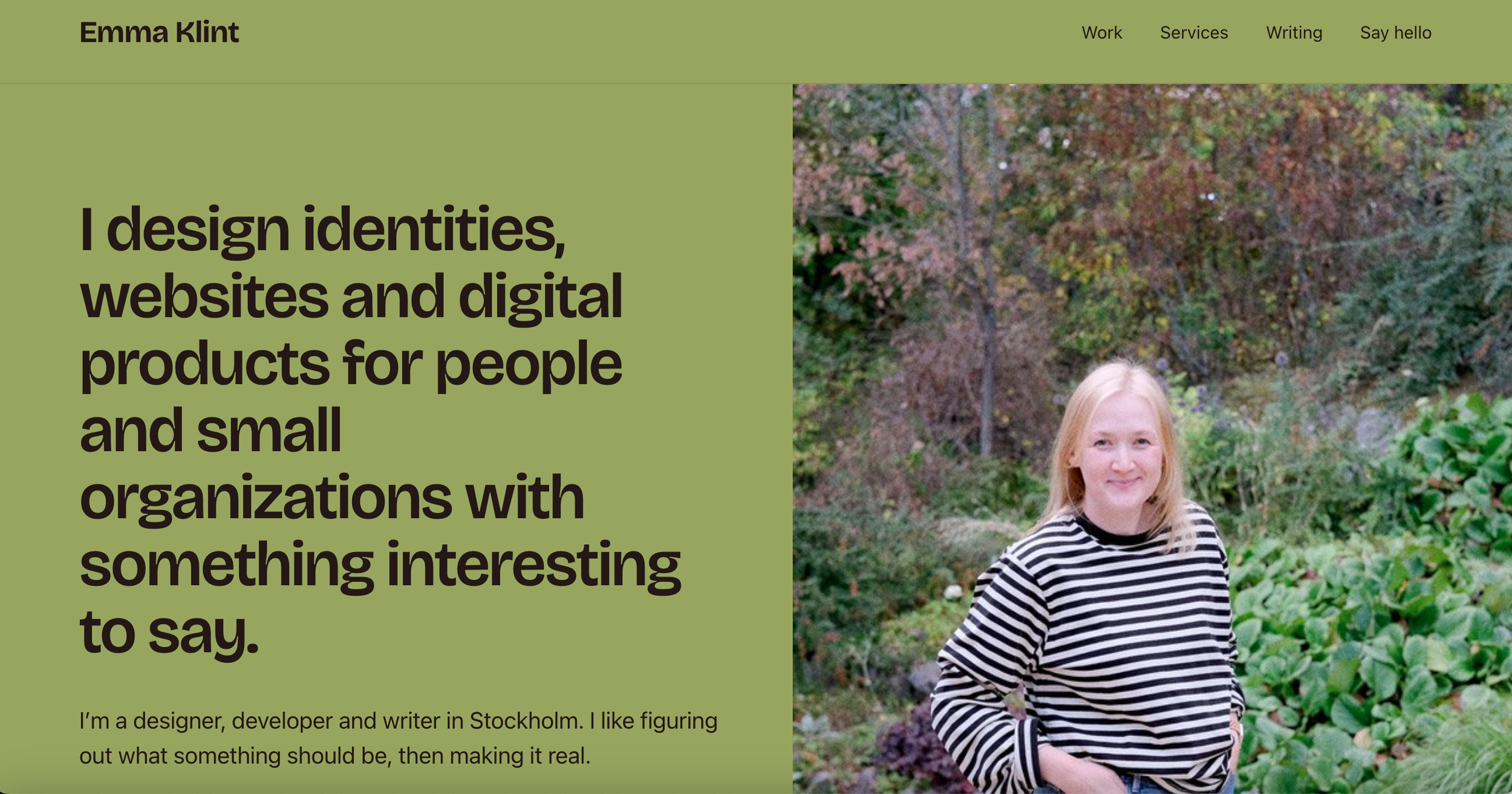
If you’d like to learn more about Emma, and what she is up to, check out her website: https://emmaklint.com/
Her Substack is linked on her site, but here it is again:
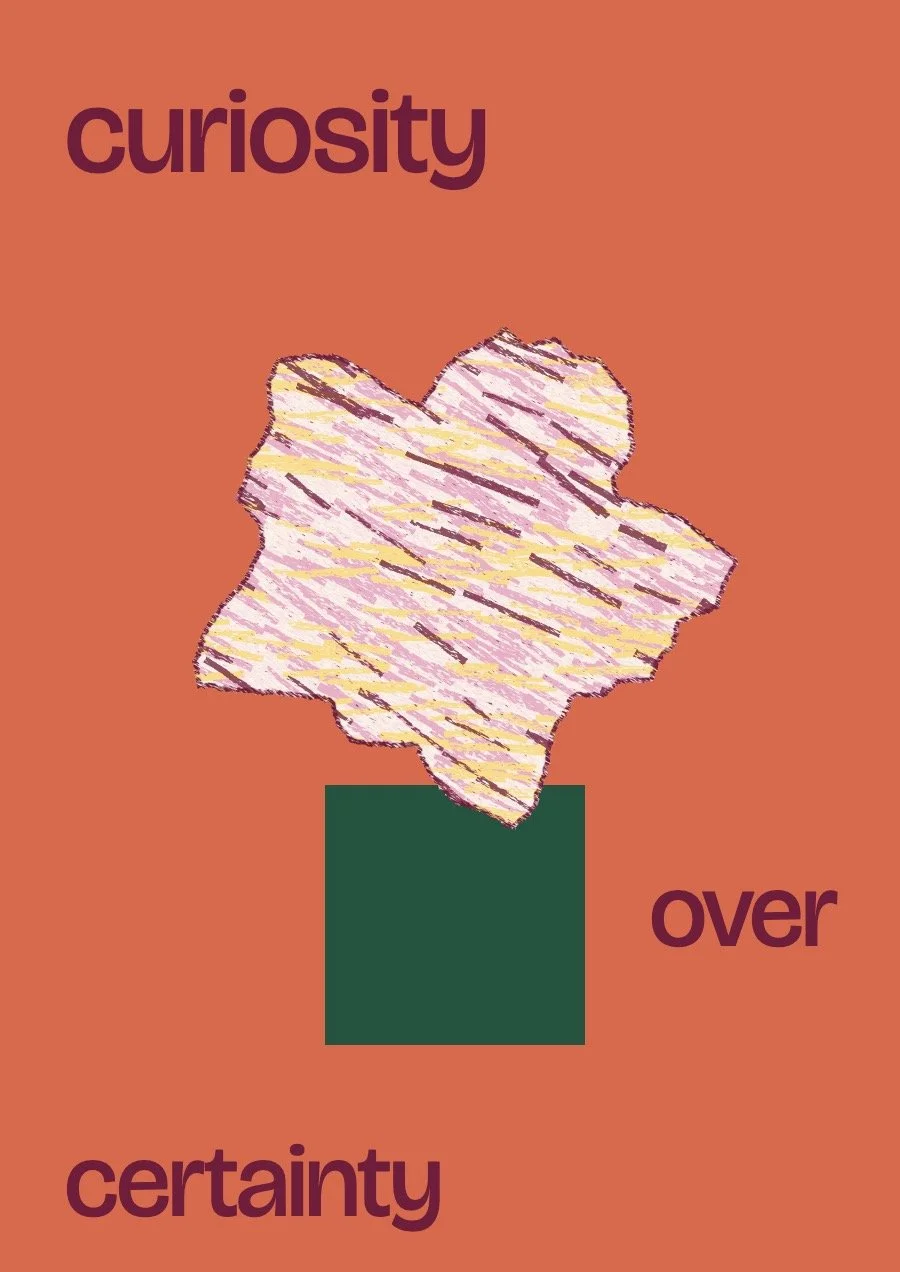
A graphic Emma created with AI
If there is someone you’d love to see featured, send us a message. We’d love to know more.
Know a Scavenger?